Thursday, 22 February 2018

GOMANG S . P Mangai–B.16.06.1916


S. P. Mangai Gomango

Inventor of the Sora Sompeng Script

S. P. Mangai Gomango
Date of Birth: 16 June 1916

Education: Form IV (1935)
Family: One son and two daughters.

Activities

S. P. Mangai Gomango took a keen interest in research work for the upliftment of Adivasi communities. After long and strenuous efforts, he developed a script for the Savara (Sora) language. He devoted himself to promoting and spreading literacy in the Savara language through this indigenous writing system.

Address: Morehinda, Padmapur, Gunupur Taluk.

Historical references to S. P. Mangai Gomango include entries in industrial and commercial directories published in Nagpur, Madhya Pradesh, India, during 1954–55.


Adivasi Script Invented by S. P. Mangai

Savara Language and Adivasi Script

The indigenous script for the Savara language was invented by S. P. Mangai Gomango.

Publications relating to the script were issued by:

Matharvanam Vigyana Prachar Ashram
Marichaguda, Odisha

The work received financial support and approval from the Central Government of India, New Delhi.

S. P. Mangai Gomango was honoured with an award by the Odisha Sahitya Akademi on 30 March 1969.


The Savara People and Their Language

The Savara-speaking people primarily live in the hilly regions of the Eastern Ghats, particularly in the Srikakulam and Vizianagaram districts of Andhra Pradesh.

Speakers of the Savara language also live in the hilly areas of Andhra Pradesh, Odisha, Madhya Pradesh, and Bihar.

In Odisha, Savara communities are found in the districts of:

  • Koraput
  • Kalahandi
  • Mayurbhanj
  • Balasore
  • Cuttack
  • Ganjam
  • Gajapati

According to the 2001 Census, the Savara population in Andhra Pradesh was 122,979.

According to the 2011 Census, the total literacy rate among the Savara community was reported as 13.68%.


Indigenous Scripts of the Munda Languages

There are three scripts that were created specifically for writing Munda languages:

  1. Sora Sompeng – for the Savara (Sora) language
  2. Ol Chiki – for the Santali language
  3. Warang Citi – for the Ho language

These three scripts are not visually similar and are not derived from a common script. They were independently created by influential community leaders to replace or supplement non-native writing systems.

Reference: Norman Zide


History of Sora Sompeng

The Savara language has also been written using an IPA-based system developed by Christian missionaries. In the early twentieth century, different writing systems were proposed for the language.

During the 1930s, there was disagreement within the community regarding which writing system was best suited to the Savara language. In response to this situation, Mangai Gomango, the son-in-law of an influential Savara leader, introduced the Sora Sompeng script in 1936.

Savara tradition states that the script itself is a divine incarnation of the deity known as Akshara Brahma.

Other scholars have suggested that some letter shapes may have been influenced by Latin or IPA letters, while certain additional loops may have been influenced by Telugu writing.


Origin and Development of the Sora Sompeng Script

Savara Pandit S. P. Mangai Gomango developed an indigenous script for the Savara language. The script consists of 25 letters and was developed at Marichaguda, Padmapur Block, Gunupur Sub-Division, Rayagada District, Odisha.

Sora Sompeng is also known by alternative names such as:

  • Matar Banom
  • Akshara Brahma
  • Madi Brahma

The script is believed to have been developed around 1935–36. Its final form emerged after approximately two years of development.

S. P. Mangai Gomango compiled stories, grammar books, astrology books, and historical works about the Savara tribe using the Sora Sompeng script.

Some of these works were published by the Central Institute of Indian Languages (CIIL), Mysore, in 1976.

The Integrated Tribal Development Agency (ITDA), Seethampeta, Srikakulam District, has conducted training programmes to help Savara people learn the script. Storybooks and primers using the script have also been developed for primary school students.


References

  • Norman Zide. 1996. Scripts for Munda Languages. In Peter T. Daniels and William Bright (Eds.), The World's Writing Systems. Oxford University Press, New York.
  • Peter T. Daniels and William Bright. The World's Writing Systems. Oxford University Press, New York.
  • Ramamurti, G. V. English-Sora Dictionary. Madras: Government Press.
  • Ramamurti, G. V. Telugu-Savara Dictionary. Director of Public Instruction.
  • Ramamurti, G. V. 1938 (Reprint: 1986). English-Sora Dictionary. New Delhi: Mittal Publications.
  • Sankar Reddy, M. 1993. Savara Language Book. Goyidi, Srikakulam: Janachetana.
  • Sankar Reddy. 1997. Savara Jivana Vijnana Akambol (Savara Life Educative Book). Goyidi: Janachetana. First Edition.
  • S. P. Mangai Gomango. 1976. Matar Banom.

Source: suryphotos.blogspot.com

SAVARALEEPI


Syllabic Alphabets / Abugidas
Ahom, Akuru, Badaga, Balinese, Batak, Baybayin, Burmese (Tagalog), Bengali, Bima, Black, Brahmi, Buhid, Carrier, Chakma, Cham, Cree, Dehong Dai, Devanagari, Dives, Ethiopic, Evela, Fraser, Gondi, Grantha, Gujarati, Gupta, Gadaba Script, Gurmukhi, Horizontal Square Script, Hmong, Inuktitut, Javanese, Kaithi, Kannada, Kawi, Kharosthi, Khmer, Khojki, Kulitan, Kurux, Lampung, Lanna, Lao, Lepcha, Limbu, Lontara, Makasar, Malayalam, Manipuri, Mandi, Mongolian, Mro, New, Ojibwe, Odia, Ol Chiki, Pahawh, Pallava, Phags-pa, Ranjana, Redjang, Sasak, Sateré Jontal, Shan, Sharda, Siddham, Sindhi, Sinhala, Sora Sompeng, Sourashtra, Soyombo, Sundanese, Syloti Nagari, Tagbanwa, Takri, Tamil, Thai, Tibetan, Tigalari (Tulu), Tikamuli, Tocharian, Tolong Siki, Varang Kshiti.


SORA LANGUAGE ADIVASI SCRIPT – INDIA

Regd. No.: 1860–7199–198
Bharat – 1601001480, Koraput

Affiliated Organizations

  1. Mattar Banom Vigyana Prachar Ashram, Marichaguda
    (India – Central Government of India, New Delhi)

  2. Soura Script Development Association (SSCDA), Gunupur
    Rayagada, Odisha.

  3. Savara Cultural Association (SCA)
    Registered under S.R. Act XXI, dated 18-08-1999.
    Regd. No.: 681/15/1999–2000

  4. Mattar Banom Vigyana Damri Selum (MBVDS), Ganaiti (Ghanantri)
    District: Rayagada
    Regd. No.: 718/52/1999–2000
    Ramo Sabor – Ph: +91 78652 186

  5. Mattar Banom Sorajnirat Jarlinguda, Radhanatho
    Ph: +91 78935 189

  6. M. Larmrdir Selum, Krushno Sabar, Bedara

  7. Sabaram Sanskriti Cultural Team (SSC), Karandiguda
    P.O.: Kataki
    Via: Ramanaguda
    District: Rayagada, Odisha, India
    Ph: +91 94379 22536

  8. All Assam Sawra Samaj (ASS)
    Established: 03-11-1979

  9. Tripura Sora Samaj (TSS)
    Established: 1952
    Re-established: 19-12-2005

  10. All Bengal Soura Samaj (ABSS)
    Established: 11-11-2011

  11. Ghatia Sabar Samaj (GSS)
    Ghatia T.E. Unit, Nagarkata
    District: Jalpaiguri, West Bengal
    Established: 25-12-2011

SAVARALEEPI


     He created such a new pulsation among the Soura people of the Gunupur region that his fellowmen regarded him as an angel who had come to save a declining primitive society. It is true that he is no more today, but by following his teachings, many Souras became educated and gave up the slaughtering of animals and the drinking of country liquor in order to build a healthy society and environment.

The creator of the Sora script, Mangai Gomango, was not a linguist. Born into an ordinary Soura family, he left such an invaluable asset to his community that he shall be remembered for all time to come. Although there are some errors in this script, when viewed from the perspective of phonetic theory, it is not entirely unscientific. According to the linguist Dr. Khageswar Mahapatra, “It is not only a script but also a symbol of the spiritual, social, and cultural awakening of the Soura community as a whole.” None but Mangai deserves all the credit for this achievement.

S. P. Mangai Gomango gave the following statement regarding the origin of the script:

The Savara people used to worship ‘Daru Brahma’ (the Wooden Form of God). But when Lalita, the Savara princess, fell in love with a Brahmin and revealed to him the secrets of this worship, the Brahmin won over the Lord. The Lord vanished and no longer responded to the prayers of the Savara people.

Then the Savaras said, “Wonderful! You do not listen to me, nor do you respond to me. But you listen to the Brahmin, who is an outsider. Alright, I say, from today I will offer you only blood and liquor. When you come back to us again and teach us to become wise and good, we will worship you then with due sanctity.”

The Savara people took such a resolution, and since then they began sacrificing cocks, goats, buffaloes, and, according to tradition, even human beings during certain rituals. They worshipped and paid obeisance, and then poured blood and liquor upon the deity.

However, after many days, at the end of the Kali Yuga, the Lord came back and said:

“Now I have come to you, not as Daru Brahma, but as ‘Akshara Brahma’—the Alphabetic Form of God. Worship me in this form. I will be visible on the Matter Banom Vijyana Hills.”

The Savara then went there and saw the twenty-four letters appearing in his vision. A shrine was subsequently built on that site, and from that day onwards, the worship of ‘Akshara Brahma’ commenced.

Mangai thus spiritualised his invention of the Sora script and established a new religious order designated as ‘Mattar Banom Dmreen’—a religion that opens the eyes and makes people good and wise. His script, symbolising the Akshara Brahma, is enshrined on a hill near Marichaguda, about 20 kilometres from the nearest town of Gunupur.

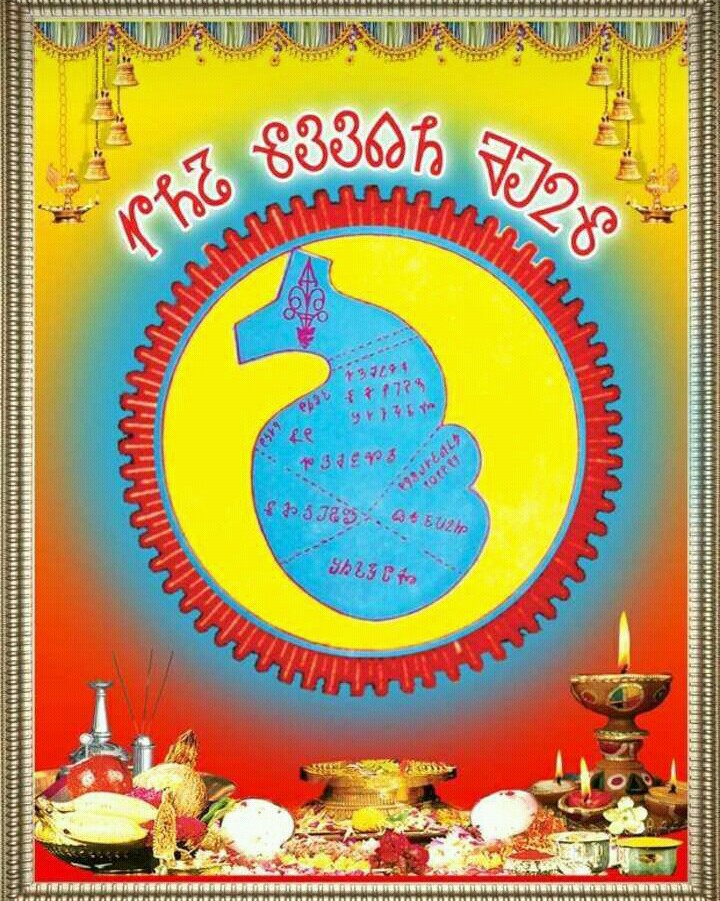
The image is in the shape of ‘OM’ in the Odia character, having the 24 letters, 9 numerals, and a crest inscribed on it. During the past forty years, Mangai proselytised a considerable number of his tribesmen and established sub-centres throughout the Sora-speaking tracts of Odisha and Andhra Pradesh.

In many villages, regular evening schools have been established to make people literate in the script. Particularly in the areas around Padampur, Gunupur, and the villages surrounding Marichaguda and Dombasara, literacy has spread to a recognizable extent. The script is, in fact, being used for intra-community communication and literary activities.

AKSHARABRAHMMA


       There were also no specific guidelines regarding the syllabus or textbooks for different classes. Only the books of scripture were used. Moral education, arithmetic, and grammar were taught. Certificates bearing the signatures of the President, Secretary, and the teacher of the “Mattar Banom Vigyana Prachar Asharam” were awarded to the qualifying students.

Mangai Gomango himself was an educated person. For the development of his community, he introduced a script so that the backward Soura community would not lag behind in the march of time and civilization in this modern era. He fought day and night to root out age-old prejudices and superstitions from his community. He won the hearts of the people by sharing in their sorrows and happiness.

He knew both astrology and mantras, which also helped him gain the confidence of his tribesmen. He prepared herbal medicines from indigenous roots and herbs and cured people of many diseases. Again, using “JHODA PHUKA” (a primitive magical-religious curative practice using “mantras”), he was able to inspire belief in the minds of his people. As a result, people loved and respected him.

He campaigned against the tradition of ritual animal sacrifice and the consumption of country liquor among his tribesmen. He travelled from village to village to propagate his script and social reforms, crossing remote mountainous regions and densely wooded Soura country for the betterment of his community.

He used to stop his journey wherever night fell and ate whatever food was available there. Eventually, he became known as the “Sora Guru.” He used to write with pen and paper wherever he stayed. Even today, many of his manuscripts are preserved in the houses of Soura people. These manuscripts are full of advice and guidance for his Soura brothers and sisters.

SAVARA SABARAMKLAYNAMI


        In the year 1965, he travelled to Vijayawada in Andhra Pradesh, where he contacted the “Inter Press” to arrange for the printing of books in his script. At first, the letters were printed using stone blocks. However, mistakes were found in some letters. Therefore, Mangai made certain changes and corrections.

During this time, a Soura language book named “SABARAMKLAYNAMI” was published by the “Swatantra Art Press” in Vijayawada.

Instead of printing books outside, Mangai became interested in publishing them through a press of his own. At this time, several personalities came forward to help Mangai and offered donations.

With financial support from Nilanber Sabar (Ghanatri), Bisa Sabar (Adlasa), Suku Sabar (Bamuri Dangar), Narasingha Sabar (Dambsara), and Pechang Sabar (Dambsara), Mangai went to Srikakulam in 1966 to purchase a printing machine. Eventually, he purchased an old printing machine from “Rama Press.” However, he could not obtain a licence to start his own press.

Still, Mangai did not lose patience. Later, in the years 1972–73, he obtained a licence. Pechang Sabar donated a piece of land at Dambsara to establish the printing press. At first, only letters were printed. Later, primers, religious books, and history books were also published.

In total, 23 books were printed, and Mangai was the author of all these books. The published books were distributed free of cost among the Soura people. The publication of these books in their own language inspired new thinking and created a new consciousness among them.

In the year 1976, for the first time, a Sora school was established in Marichaguda village. It was named “Matter Banom Bigyan Prachar Asharam.” Later, many more schools were established in different Soura villages. Many educated Souras taught voluntarily in these schools.

All the Soura people came forward with great enthusiasm for the development of their own religion and culture. Many schools were opened not only in Odisha but also in different parts of the neighbouring state of Andhra Pradesh.

However, there was no specific curriculum in these schools.

Sri Aasharabramma


Small gates are found in it. According to the Sauras, these gates are named after the three Hindu supreme Gods: Brahma, Vishnu, and Maheswara.

The news of the invention of the Soura script by Mangai Gomango created a great stir among the Soura society. Traveling from village to village, he tried to create awareness among the people. However, the Soura people, who had been living in darkness for generations, did not accept it easily. From Gunupur to Gudari, many Gamangos opposed him. Still, Mangai Gomango remained devoted to his mission and never gave up.

He explained to all those he knew that, in the absence of their own script, their language would eventually perish. Slowly but steadily, his message reached his tribesmen. Based on this script, a new religious sect was formed under the name “Mattar Banom Damdree.”

The followers of this new religion were encouraged to give up the use of country liquor and animal sacrifice before God. In one way, it contributed to their economic upliftment, and in another, it created awareness among them to become better human beings.

In the beginning, Mangai Gomango propagated these principles verbally. Those who were initiated by him tried to lead disciplined lives. This newly invented script was then linked to the new religion, and thus it gradually gained acceptance among the people.

Everyone believed that “Daru Brahma” had returned in the form of “Akshara Brahma.” Mangai Gomango devoted himself day and night to propagating it. From 1936 to 1952, he spread his message mainly through verbal communication and by writing in small pocket notebooks. However, it was not possible to provide handwritten books to all Soura brothers and sisters. Therefore, he began searching for a permanent solution.

THE FATHER OF SORA SCRIFT SORAN SOMPENG


THE FATHER OF SORA SCRIPT – SORAN SOMPENG

Orissa is a wonderland of marvelous art, craft, architecture, culture, traditions, languages, and many great personalities. A number of poets, philosophers, and social thinkers were born in this holy land and passed away, leaving behind great deeds that have made them immortal. Sora Pandit Mangai Gomango, the inventor of the Sora script, is one of those great personalities.

There are sixty-two categories of Scheduled Tribes living in different parts of Orissa. Among them, the Sabaras or Soras are one of the prominent tribal communities, living in almost every corner of Orissa. However, they are found in large numbers in Gajapati District and the Gunupur Sub-Division of Rayagada District.

They have their own language called “Sora,” which belongs to the Austro-Asiatic language family. The script of this language, “Soran Sompeng,” was invented in the year 1936. Inspired by religious and nationalistic feelings, Mangai Gomango, a learned person from the Sora community, went into meditation for 21 days in the forest adjoining his village, Marichaguda. During this period, he saw a script in his dream, which he believed to be a divine gift for the Sabaras.

According to Sora tradition, their legendary “Daru Devata” reappeared in the form of “Akshara Brahma.” The letters of Akshara Brahma symbolize the 24 important deities of their religion, which together form the Sora script, known as “Soran Sompeng.” The term “Soran Sompeng” means the phonetic alphabet of the Sora people.

The stone on which the script was first revealed has become a place of pilgrimage for the Sora community. In the idol of Akshara Brahma, twenty-four syllables, numbers up to twelve, and a symbol of wisdom are arranged in the shape of the Odia letter “Om.” All these letters were kept hidden inside a temple made of cement.

There are three

SAVARALEEPI MEPPING

  Telugu & English → Sora Sompeng (నవీకరించబడిన సంపూర్ణ చార్ట్) ఈ చార్ట్ మీరు అందించిన తెలుగు (Telugu) మరియు ఇంగ్లీష్ (English) అక్షరాల ...